Loading...

DREAMZ 4 SEAMZ – charitable initiative

Accuracy from the palm of your hand – The Pocket Radar

By |2021-05-24T12:28:46-06:00April 20th, 2015|DREAMZ 4 SEAMZ|

*|MC:SUBJECT|*


“Accuracy from the palm of your hand” – The Pocket Radar

In the beginning, radar guns had their place… hidden behind a bush off the side of the highway trying to catch the red Mustang doing 95.  It wasn’t until the mid-1970’s that radar guns made their way into the ball parks.  Ever since, they’ve proven to be popular tools for baseball players, coaches, and scouts.  And there’s good reason for it.  Radar guns provide the most accurate, unbiased performance feedback for throwing, hitting, and pitching velocities.

Over the years, many radar guns from various manufacturers have strived for one thing:  accuracy.  A radar gun that doesn’t read the correct speed is like a glove with a hole in it.  It’s safe to say that after 40 years of product testing and advanced engineering that the top companies have a firm grip on the accuracy issues.  However, from a design standpoint, there is only one radar gun that leaves the others in the dust, and it’s called the Pocket Radar.

Unlike all big and bulky radar guns, the award-winning Pocket Radar is the first radar gun you can actually fit in your pocket.  Instead of resembling the shape and grip of a gun, the Pocket Radar is more like a cell phone.  It’s very discreet, at a great price, and it’s just as accurate as some of the most expensive radar guns on the market (+/- 1 mph).  From a scouting standpoint, it can be problematic to have a standard radar gun pointed at a kid on the mound.  If a younger player sees that he’s being clocked, he’s much more likely to try to throw harder than he actually can, which can result in a poor performance or an arm injury.  The discretion of the Pocket Radar is a unique and invaluable feature for scouts to stay off the players’ radar… pun intended.

The Pocket Radar comes in two different models: the Classic and the Ball Coach.  The Classic model was designed as an all-purpose radar gun for clocking anything in motion.  Though it wasn’t designed for reading pitch and swing speeds, this model still does the trick.  The Ball Coach is a more improved model designed specifically for clocking speeds in sports.  It has a Constant-On mode that allows for hands-free use and a recall memory of 25 speed readings.  If you’re looking for a radar gun for the purpose of clocking baseball and softball speeds, the Pocket Radar Ball Coach is the way to go.


Here are the specs on the Pocket Radar Ball Coach, the official radar gun for Triple Crown Sports:

Range: Ball Speed from 120 feet Away

25 to 130 MPH (Accuracy +/- 1 MPH)

Recall Memory: 25 speed readings

Size: 4.7 x 2.3 x 0.8 inches

Weight: 4.5 ounces with batteries

Battery Life (Typical Use):  

  • Manual Trigger Mode > 2,000 Readings;  

  • Constant-On Mode > 1 Hour with 2 new alkaline AAA batteries (included)

Includes:  Belt Holster Case, Wrist Strap, Quick Start Guide

Warranty:  Two years

Pros:  Reduced price and size but same accuracy as Jugs and Stalker radar guns, Scouting discretion, No need for a bulky case, just your pocket

Cons:  Beyond 120 feet, it won’t read speeds accurately, Must be just behind the backstop for best results


Comments Off on Accuracy from the palm of your hand – The Pocket Radar

Slap-Happy; The Art of Slap Hitting in Fast-Pitch Softball

By |2021-05-24T12:28:47-06:00April 12th, 2015|DREAMZ 4 SEAMZ|

*|MC:SUBJECT|*


Slap-Happy; The Art of Slap Hitting in Fast-Pitch Softball


It is no secret by now that people love the long-ball. The girls with the walk- off homers and high RBI’s are the ones that get most of the glory in the softball world. As impressive as power hitters are; unless you’re launching solo shots on a regular basis, someone has to set the table for your big moments. Those table-setters often come in the form of a slapper. We caught up with Emily Allard, current Chicago Bandit (NPF) and all-time stolen base leader at Northwestern University.


“Not only is your job to get on base and "set the table," but just by being a slapper, you are automatically a threat the moment you step into the box. We have an incredibly unique ability to change the momentum of a game simply by putting the ball in play.”


Allard has enjoyed tremendous success as a slapper both in college and professional play. Her passion for the hitting style has driven the creation of her company, Be The Momentum with Kristin Jensen (formerly Scharkey) another former NU slapper standout. BTM, in Allard’s words “… focuses mainly on clinic instruction and social media support for slappers, but recently has expanded into speed, baserunning and defensive work as well”.


The slap hitter is an incredibly versatile and CRUCIAL hitter in the line-up. Often seen in the 1,2, or 9 spot; the slapper’s job is to get on base and move runners into scoring position. Newbie spectators of the game are often shocked to see that a slapper begins stepping into her route to first before contact is made with the ball. The purpose of the run-through is to get out of the box faster and lessen her time to first base. Allard adds, “As a slapper, your entire existence relies on your ability to get on base in any way possible, most often with short game or challenging the defense to make a play against your speed”.


The art of slapping can come in multiple forms. There is the slap-bunt (or drag-bunt), where the slapper makes her steps and drops a quick bunt down. The purpose of these bunts are for base hits so they are not considered sacrifices. Although, if a slapper gets thrown out on a drag bunt but also moves her runner, she was still productive! The second, and most authentic form of slapping is the infield slap. This can come in multiple forms (soft roller/high bounce), but is hit with the intention of beating the throw to first. This is a slapper’s opportunity to really showcase her speed and one of Allard’s favorite parts of slapping. “Our speed forces defenses to be PERFECT in order to get us out. That's fun“. Placement and bat control are crucial pieces to this technique. The final addition to the slapping repertoire is the power-slap. This technique is pretty self-explanatory. These slaps are base hits that make it through the infield. Power slaps come into play when an RBI is needed or if the outfield is playing you incorrectly. A quick analysis of the defense is all it takes for a slapper to strategize her power slap approach. When the outfield is playing deep, just a strong poke into shallow left-center is all it takes (the infield will typically play tight to defend the tap/drag leaving a gap in shallow OF).  If the outfield is playing close (which is very commonly done), then unleash the full power slap and turn the would-be single into a double or triple.

Athletes who are able to master each slapping technique become virtually indefensible. Slappers are the ultimate triple threat at the plate and deserve major props for their production. They are able to speed up game and keep EVERYONE on their toes.

"Setting the table is just as important as clearing the bases." This is the BTM motto and a very true statement! Fortunately, with the accomplishments of big time slappers such as Allard, Caitlin Lowe, and Natasha Watley, the art of slapping has been put on the map and forced people to pay attention. Demarini has caught the slapping bug and created the FIRST and ONLY slapper specific bat. With a longer barrel and weighted even closer to the hands, the CF8 is tailored completely to the unique needs of the slapper. The CF8 Slapper is now available and we have it here at Better Softball. Come on by and try it out at our in-house demo stations!


#Slaphappy


Comments Off on Slap-Happy; The Art of Slap Hitting in Fast-Pitch Softball

Revolutionizing the Fungo – The Accubat Advantage

By |2021-05-24T12:28:47-06:00April 8th, 2015|DREAMZ 4 SEAMZ|

*|MC:SUBJECT|*

Revolutionizing the Fungo  –  The Accubat Advantage

Hitting fungo to your fielders is not the easiest thing to do… even for the seasoned coaches.  Throwing a ball up to yourself and hitting it with a long, skinny fungo bat makes it very tough to accurately place fly balls, line drives, and ground balls where you intend.  There’s almost an art to hitting fungo accurately.  And we’re not all Picasso’s.  So ask yourself this:  When you hit balls to the kids at practice, do they spend more time catching the ball or running to balls that are out of reach?  If you answered with the latter, consider making it a little easier on yourself and your players by getting an Accubat.


The AME Innovations Accubat comes in two models: the Coaches Helper Model and the Pro Model.  Both models are constructed with the same materials – a cushioned, non-slip, foam handle, a hard plastic outer racquet, and a polypropylene net bound by 30 rubber torsion bands.  The netted hitting surface is relatively the same area on both models (90 in2).  The only difference is that the Pro Model is 6 ounces heavier than the Coaches Helper (26 oz. vs 20 oz.).  The advantage of the Pro Model is that it allows you to hit the ball harder and further than the Coaches Helper.

The Accubat is recommended for coaches and parents of baseball and softball players at all ages.  It’s scientifically designed to give you placement and distance control unparalleled by any other fungo hitting device.  The Coaches Helper Model is recommended for players under the age of 12.  However, ball players over the age of 12 may need that extra oomph.  The Pro Model is recommended for the older players who can handle the faster pace.

As a highly competitive high school, travel ball, and college pitcher, I understood the importance of giving my fielders as many reps as I could.  I was never the pitcher whose sole focus was striking people out.  I pitched to contact and let the fielders behind me do their job.  That said, I always did what I could to improve my defense’s fielding skills.  Any chance I got to give my fielders some fungo work, I took advantage of.  All serious pitchers (and ball players in general) should have that same mindset because there’s no worse feeling than being stranded in the field error after error when you should be in the dugout getting ready to hit.  

Baseball is a repetition sport.  Infield and outfield fungo reps are crucial to building and maintaining defensive skills.  The Accubat has truly revolutionized the manner in which baseball and softball fungo can be done.  Coaches who want to make their practices more efficient and parents who want to give their kids some extra reps in the back yard should seriously consider purchasing an Accubat.  


Pros:  Very accurate, Easy and fun to use, Offers more control than a fungo bat, Very durable.

Cons:  Can be considered a rookie tool to high level competitors because of some notion that it steers away from how fungo has traditionally been and should be done.  But c’mon… really?  Form < Function.


Comments Off on Revolutionizing the Fungo – The Accubat Advantage

Take total control of your hitting power

By |2021-05-24T12:28:47-06:00April 7th, 2015|DREAMZ 4 SEAMZ|

*|MC:SUBJECT|*

Take total control of your hitting power...


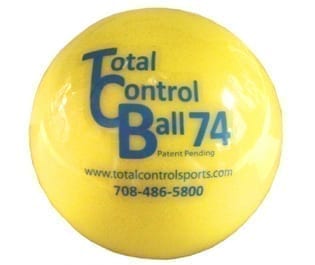
If there is one thing baseball and softball hitters want more of from their swing, it’s more power.  There are tons of training aids out there that aim to increase power, but do they really work?  One product that has exploded in popularity in recent years is the Total Control Ball… and it works!

Total Control Balls are designed to strengthen slow and fast twitch muscles as well as develop proper extension through the hitting zone.  Hitting these balls can entirely change the way players think about making contact with an incoming pitch.  Instead of focusing on making solid contact with the ball, this training aid forces hitters to make solid contact through the ball.

Long gone are the days of hitting basketballs to develop power through the hitting zone.  Yes, basketballs work, but only until they pop.  Plus, who wants to haul around all of that bulkiness to their practices?  Total Control Balls give you that same resistance at contact, but they are roughly the same size as a baseball/softball so you won’t have to worry about getting lazy with your hand eye coordination.  And don’t worry about them popping.  These things hold up for a long time.

Total Control Balls are great for all ages and you don’t need access to a hitting facility or a baseball/softball field to use them.  On average, a solid hit should travel between 10 and 30 feet.  The most rewarding feature of this product is that it provides instant feedback.  If hit properly through the center of the ball, there’s no other way to describe it other than “it just feels right.”  However, if you top the ball or hit underneath it, you’ll find that it will drop to the ground right in front of your feet.  That said, it’s a great training tool to encourage line-drive hits as opposed to ground balls and pop flies.

All Total Control Balls are made with a high energy-absorbing PVC/non-phthalate outer material designed to last in hot and cold conditions without bursting.  The inner filler material is composed of sand and is what gives it its weight.  Let’s break down the specs on the variety of Total Control Ball options.


TCB 74-  2.9” diameter, 14.9 oz.  Used for both softball and baseball.  Optimum use is for front toss side toss, and tee work.  


TCB 82-  3.2” diameter, 14.9 oz.  Used for both softball and baseball.  Optimum use is for front toss, side toss, and tee work.


TCB ATOMIC-  4.7” diameter, 31.7 oz.  Used for both softball and baseball.  Optimum use is for side toss and tee work only.  Not recommended for players under the age of 12.


YH50-  Less than 1 oz.  Golf ball sized.  Recommended for front toss.  Best option for working on hand eye coordination.  No sand filler.


YH80-  3.2” diameter, 2.8 oz.  Only softball sized wiffle ball designed to last.  Replaces plastic wiffle balls that dent, crack, and break.  No sand filler.


Pros:  Increases power, good for all ages, long lasting durability, won’t damage bats, instant feedback. Improves follow through, and bat control.

Cons:  Not good for overhand batting practice; more expensive alternative to batting practice with regular baseballs/softballs


Comments Off on Take total control of your hitting power

2015 College BBCOR Weapon of Choice

By |2021-05-24T12:28:48-06:00March 29th, 2015|DREAMZ 4 SEAMZ|

*|MC:SUBJECT|*


When it comes to BBCOR bats, we at Better Baseball like to look to those who are using them at the highest level,  which in this case is NCAA Div I Baseball. The first month of the college season has produced a top ten list of perennial powerhouses, with a long history of winning and College World Series appearances. Every year when we do our BBCOR Breakdown on the top 10 teams in DIV I, we find some interesting trends and occurrences that leave us scratching our heads when it comes to the bats that these players choose to swing. This year is no different. 

Most of the BBCOR bats on the market today will perform about the same due to the safety regulations that the barrel is required to not exceed. With that said, players are now primarily looking for sound, feel, and balance more than overall "pop" or performance. 

For those of you who don't know, most of these schools are contractually obligated to swing the brand of bat that sponsors or endorses that collegiate program, i.e. LSU- Demarini, UCLA- Easton, South Carolina- Rawlings. With that said, a player at that school can swing any bat as long as it is made by that particular manufacturer. For instance, a player at Rice University ( Louisville Slugger sponsored school), can swing any BBCOR bat in the louisville slugger line, 515 Omaha, 715 Select, or the 915 Prime as well as any past models of that manufacturer. 

2015 Trends

Like 2014, we are seeing more and more players swinging alloy barrels than composite barrels. Almost 87% of the players we observed were either swinging a one piece alloy barrel, like the Easton S3z, or a two piece barrel (composite handle, alloy barrel), like the Demarini Voodoo Overlord FT

Some players are even using models dating back to 2012. We did witness some Florida batters using Easton Surges,  a bat that has been discontinued and replaced by the Easton S2z  since the start of the 2013 season. Even some LSU players were swinging some of the 2013 Demarini Voodoo Models. Is this trend due to superstition? Do these hitters think that these particular models are superior bats to the newer modes? The answer seems to be player preference. 

Probably one of the most notable trends in 2015 bats is the absence of the high end BBCOR bats at these top 10 schools. Although, we did see schools using bats like the 915 Prime  and Easton Mako outside of the top 10.  Only a handful of players were using the Easton Mako Torq , a bat that has garnered a lot of hype and attention this season due to its rotating handle.  We didn't find any players at any of the Demarini Schools swinging the CF7, but we did see several of them in their dugout and on-deck circles. The Louisville Slugger Prime was also a no-show in the top 10 list but we did see it being used by some of their sponsored schools in the top 25. 

*NATIONAL RANKING AS OF 3/23/15

Better Baseball BBCOR Breakdown

When deciding which bat to designate for a particular team we looked at all 9 hitters in the line up to see which bat is being swung the most . A lot of the time several different bats will be swung by the same team, but we only list the most popular model from the leadoff hitter to the bottom of the order. For instance South Carolina swings the Rawlings 5150, the Velo, and the Trio, but more hitters are swinging the Velo BBCOR than any other.  

The most popular bat in our list is the Easton S2z. Easton also has the most sponsored schools in the top 10 with four. ( Demarini 3, Slugger 2, Rawlings 1).  The second most popular on the list is the Demarini Voodoo Overlord. Alloy barrels reign supreme on this list with all 10 schools preferring the aluminum alloy  over the composite barrel. 

As the season carries on, and new 2016 bats become available, look for some of these trends to change. We hope this list helps players make  more of an educated decision when picking the perfect BBCOR for their high school or travel ball team. But remember every swing is different. It is  best to try a bat out to see if that works for your specific swing and playing style. You can try out all of these bats and more at any Better Baseball location free of charge.  


Comments Off on 2015 College BBCOR Weapon of Choice

Get a grip on your confidence at the plate

By |2021-05-24T12:28:48-06:00March 24th, 2015|DREAMZ 4 SEAMZ|

*|MC:SUBJECT|*


Get a grip on your confidence at the plate

One of the most important aspects of hitting is being comfortable at the plate.  Before stepping in the batter’s box, players should consider what they can do to maximize their comfort level.  Having the right size bat is crucial.  Wearing batting gloves, to some, is also a must. But what about the bat grip?  Are the pre-wrapped grips that come standard to metal bats doing the trick?  And what’s a good alternative to the sticky mess pine tar leaves behind with wood bats?

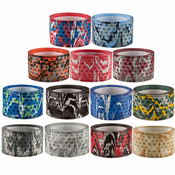
Lizard Skins bat wrap is the answer you’ve been looking for. Lizard Skins specializes in high quality polymer bat wraps that are designed to increase comfort and confidence at the plate.  These bat wraps are offered in three different thicknesses (0.5mm, 1.1mm,and 1.8mm) and in a variety of color combinations (including solid colors, two-tones, and camos).

Do you like a very thin bat handle that you can get your fingers around as much as possible?  If so, the 0.5mm Lizard Skins bat wrap is for you.  If you like a thick handle with a lot of cushion, the 1.8mm bat wrap is calling your name.  Regardless of the thickness you’re comfortable with, all Lizard Skins bat wraps are slip resistant, very easy to put on, and designed to fit any bat (wood, aluminum, composite).

In my many years of baseball experience, I’ve seen it all when it comes to bat grips.  Most players just stick with the bat wrap that’s already on it when purchased.  Those guys don’t know what they’re missing.  Some take the standard grip off and use athletic tape or pine tar for a smaller bat handle.  That’s what the 0.5mm wrap is for!  Many Major League players, including Hunter Pence, David Wright, and David Ortiz, have adopted Lizard Skins as their grip of choice and haven’t looked back.  I’d say those guys probably know what they’re doing, so take it from them. They’re only perennial all-stars.
 

Lizard Skins bat wraps are hands down my favorite bat wrap, and that also seems to be the consensus among my close baseball peers.  There is an undeniable “swag effect” that comes with each Lizard Skins purchase.  Players will see your bat wrap and be drawn to it.  Once they get a feel for it, they’re going to want one for their bat.  I’ve even seen entire teams outfitted with the same color grip and it’s a good look!  There is no other bat wrap in the baseball community growing as fast as Lizard Skins.  Get on board, and get a grip!

Lizard Skins bat wraps are available for purchase here.


Comments Off on Get a grip on your confidence at the plate
Go to Top